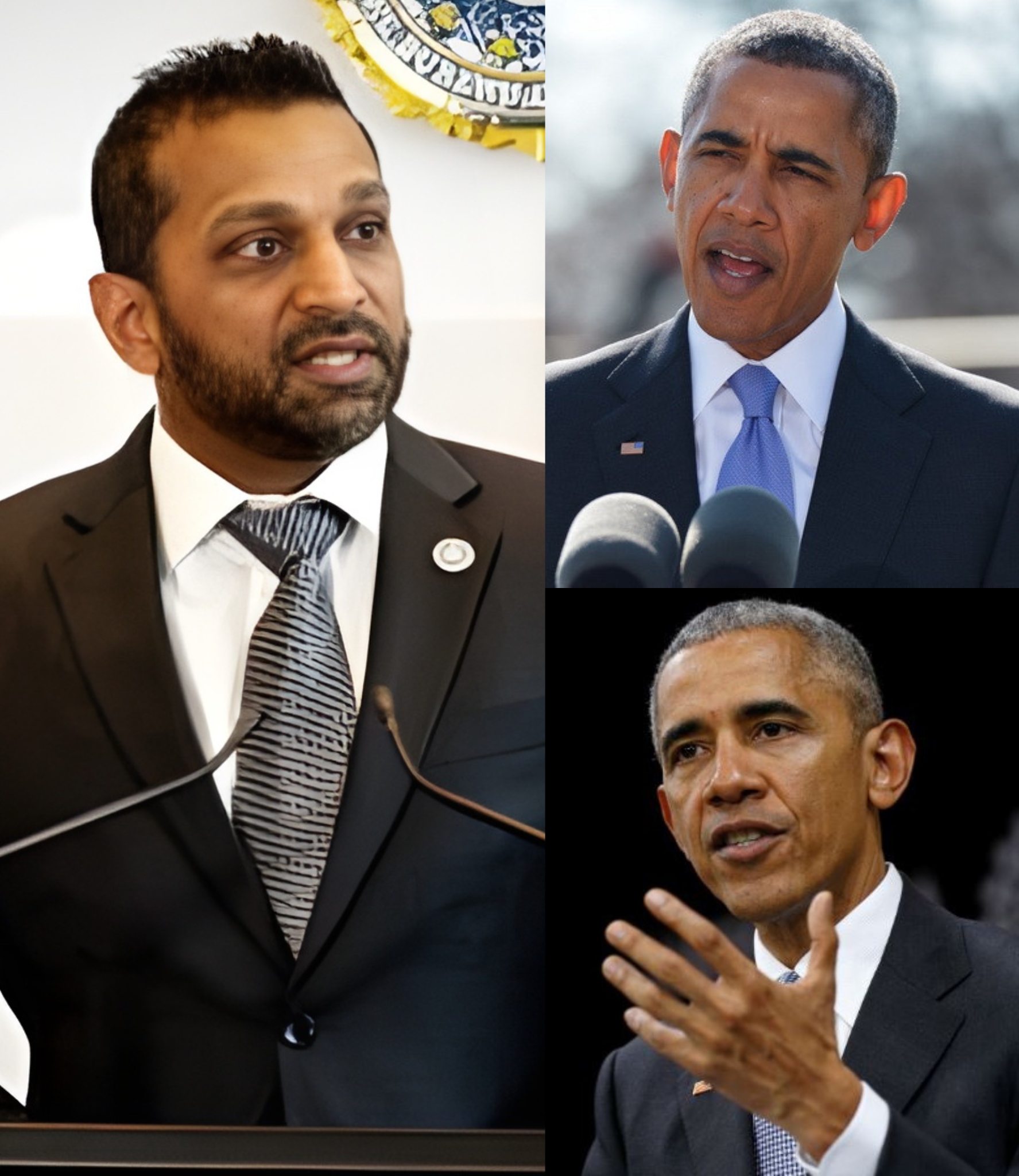
Washington was thrust into immediate controversy after Kash Patel announced a dramatic reclassification, framing what he described as an Obama-era “deep government” as a criminal organization.
The declaration spread rapidly, not as a court filing or indictment, but as a political statement that instantly polarized audiences across ideological, institutional, and generational lines.
Supporters interpreted the move as long-awaited accountability, while critics warned it represented a dangerous escalation built on accusation rather than adjudicated evidence.
At the center of the announcement stood Patel’s investigator, Jan O’Berro, whose language framed the issue as moral and constitutional, not merely political disagreement.
“There is a deep government operating within the sovereign nation we know and love,” O’Berro said, a sentence that quickly became the fulcrum of national debate.

The claim suggested the existence of hidden operatives embedded within federal infrastructure, a concept resonating deeply with long-standing public distrust of bureaucratic power.
Skeptics immediately challenged the framing, arguing that such language blurs the line between institutional continuity and criminal conspiracy without judicial substantiation.
Within hours, legal analysts debated what “reclassified” actually meant, questioning whether the term carried legal authority or functioned as rhetorical positioning.
Patel’s allies insisted the move signaled the beginning of formal action, citing the announced formation of a Justice Department task force as evidence of seriousness.
According to the statement, the task force would draw from FBI, ATF, and DTF units specializing in intelligence operations, heightening both anticipation and concern.
Civil liberties advocates reacted swiftly, warning that expansive investigations based on vague definitions risk undermining due process and professional neutrality.
Supporters dismissed those warnings as premature, arguing that transparency requires uncomfortable scrutiny, especially when power operates beyond electoral oversight.
Social media erupted into dueling narratives, with some celebrating the declaration as courageous truth-telling, others condemning it as inflammatory and destabilizing.
Hashtags proliferated, videos multiplied, and commentary hardened rapidly, illustrating how digital platforms accelerate certainty before facts can be independently verified.
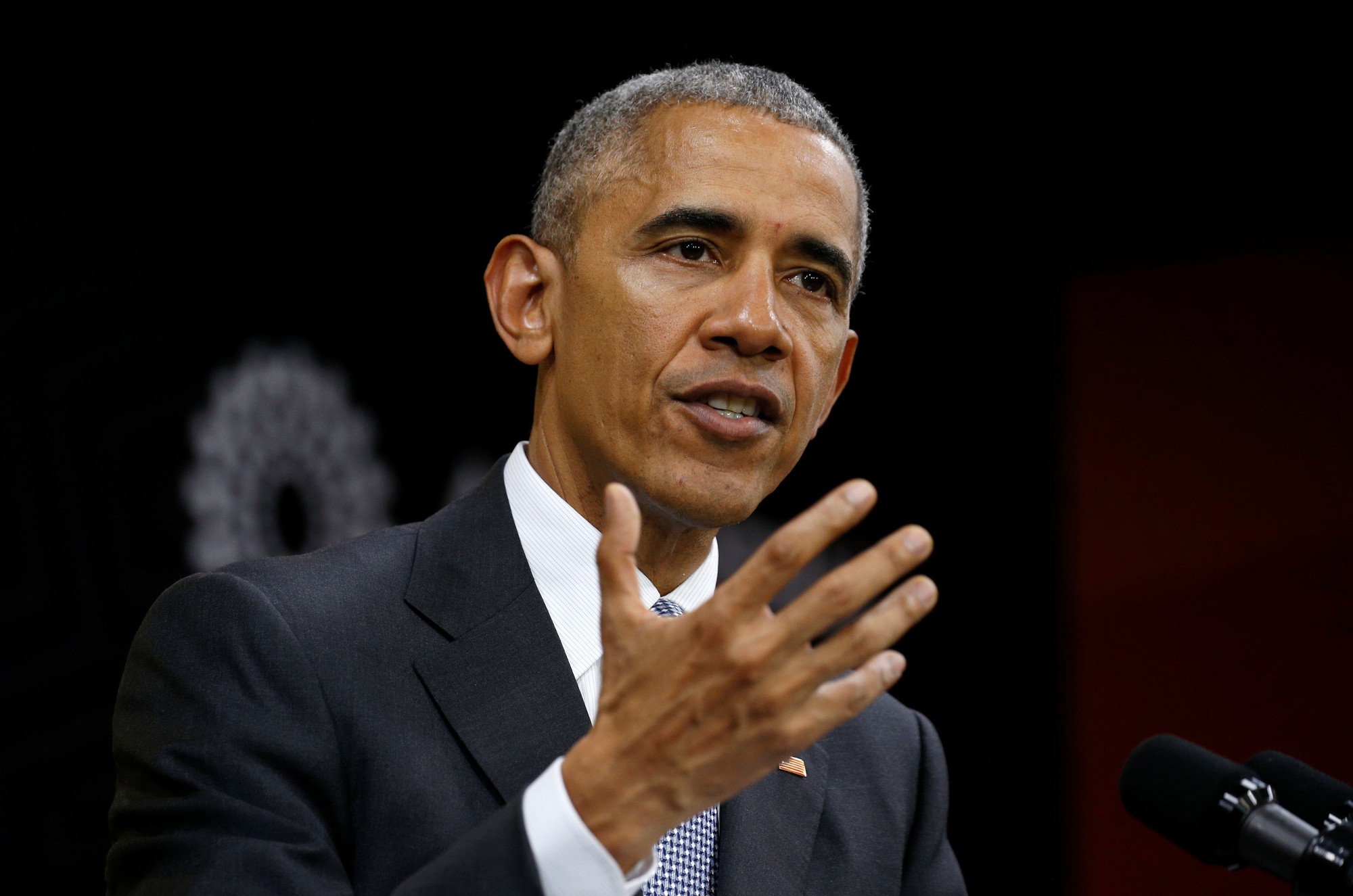
The phrase “Obama-led deep government” proved especially contentious, with critics calling it misleading and supporters arguing leadership need not be formal to be influential.
Defenders of the claim insisted that power networks often persist across administrations, shaping outcomes invisibly through entrenched positions and informal coordination.
Opponents countered that such reasoning risks criminalizing governance itself, collapsing dissent, bureaucracy, and policy continuity into a single ominous label.
Cable news panels filled airtime parsing every word, debating whether the declaration marked reformist zeal or a slide toward politicized investigation.
Legal scholars emphasized that no indictments accompanied the announcement, cautioning audiences against conflating political statements with prosecutorial outcomes.
Nevertheless, the emotional resonance proved undeniable, especially among Americans who feel alienated from federal institutions and elite decision-making.
Polls circulated widely, claiming significant public support for addressing the so-called deep government issue, though interpretations varied sharply by ideology.
Analysts warned that polling language can reinforce narratives regardless of legal reality, shaping perception through repetition rather than evidence.
Inside Washington, officials reportedly scrambled to assess implications, uncertain whether the declaration signaled imminent action or prolonged symbolic confrontation.
Federal employees expressed private unease, concerned about morale, politicization, and the erosion of professional norms within government service.
Patel’s supporters argued that discomfort indicates necessity, insisting that systems resistant to scrutiny rarely reform without external pressure.
Critics responded that suspicion alone cannot substitute for proof, warning that investigative power aligned with political ambition invites abuse.
International observers watched cautiously, interpreting the controversy as another indicator of American polarization with potential global consequences.
Some allies worried that internal institutional conflict could weaken diplomatic credibility, while others argued transparency ultimately strengthens democratic resilience.
The episode revived long-running debates about the “deep state,” a term once fringe that now occupies mainstream political discourse.
Its normalization has reshaped how citizens interpret intelligence agencies, bureaucratic continuity, and policy decisions spanning multiple administrations.
Critics stressed that democratic systems rely on institutional memory, warning that dismantling it recklessly risks chaos rather than reform.
Supporters countered that memory without accountability becomes insulation from consequence, enabling misconduct by default.
As the story spread, nuance struggled to survive, crowded out by engagement incentives favoring outrage, certainty, and simplified narratives.
Fact-based clarification lagged behind viral interpretation, leaving audiences emotionally invested before details could settle responsibly.
The Justice Department task force announcement became symbolic regardless of outcome, signaling willingness to confront claims of hidden power directly.
Whether that confrontation leads to transparency or turmoil remains deeply contested across political, legal, and civic spheres.
Lawmakers across parties braced for ripple effects, anticipating hearings, subpoenas, and constitutional challenges should investigations advance.
Some predicted the move would energize Patel’s base while alienating moderates wary of destabilizing institutional norms.
Others argued moderation has failed, claiming disruption is the only path to expose entrenched influence structures.
The controversy revealed a nation divided not only on policy, but on reality itself, disagreeing fundamentally about who governs and how power operates.
For many, the declaration validated long-held suspicions about invisible influence shaping national outcomes beyond public consent.
For others, it intensified fear that political leaders now frame opposition as criminal threat rather than democratic disagreement.
As commentary intensified, the declaration’s impact appeared less legal than cultural, reshaping expectations about accountability and authority.
The moment underscored how modern politics often unfolds through narrative before law, emotion before evidence, and perception before process.
Whether future investigations substantiate or undermine the claims will determine how history judges this episode.
For now, the nation remains locked in debate, watching closely as words alone redraw lines of trust, fear, and allegiance.
In an era where narrative can outpace institutions, Kash Patel’s declaration has already achieved one undeniable result.
It forced Americans to confront their deepest suspicions about power, governance, and the fragile boundary between reform and rupture.