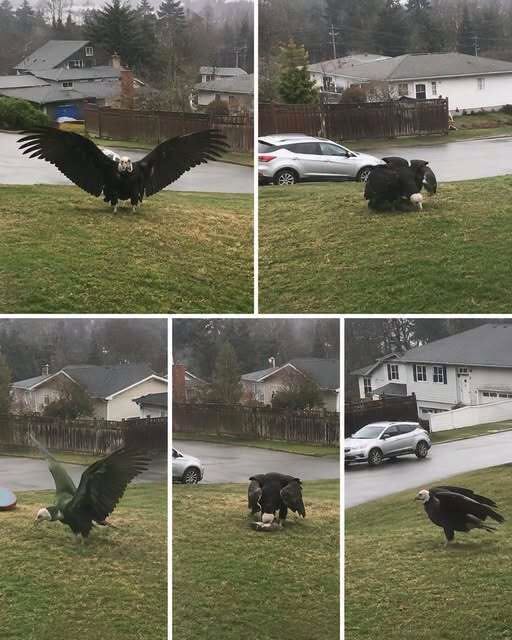
A strange sight in the Texas sky has drawn attention for one simple reason: people are still fascinated by the possibility that nature can surprise us. Reports of a massive bird-like figure moving overhead have turned into the kind of story that makes viewers pause, look twice, and wonder what they actually saw.
The description has been shared as a rare giant eagle sighting, but the larger question is not just about size. It is about evidence, identification, and how quickly an unusual moment can move from a local report to a much wider conversation.
Why the Sighting Caught So Much Attention
Large birds already have a powerful presence in the sky. Eagles, condors, vultures, and other raptors can look even bigger depending on distance, lighting, camera angle, and weather conditions. When a dark shape passes overhead, the human eye does not always have enough reference points to judge scale accurately.
That does not make the sighting uninteresting. It makes it a reminder that wildlife identification is often more complicated than it appears. A brief glimpse, a distant recording, or a moving shadow can leave room for very different interpretations.
Online discussions have focused on several possibilities, including whether the figure could have been a known large bird seen under unusual conditions, a rare visitor outside its expected range, or simply a case where perspective made the animal appear far larger than it was.
What Researchers Would Look For
If wildlife experts were asked to examine a report like this, they would not rely on excitement alone. They would look for clear images, video metadata, location details, weather conditions, flight behavior, and comparisons with known species in the region.
Modern wildlife research can involve high-resolution imaging, field surveys, habitat analysis, and databases that track bird movement. In some cases, citizen reports can also help researchers notice unusual patterns, especially when multiple sightings are documented carefully.
Still, a single dramatic sighting is not the same as scientific confirmation. To identify a rare or unknown animal, experts would need repeatable evidence, reliable documentation, and a careful process that rules out more ordinary explanations first.
The Bigger Picture
Stories like this also raise a useful point about conservation. If an unusually rare bird or unexpected population were ever confirmed, the response would need to be careful. Public attention can help protect wildlife, but it can also disturb habitats if people rush to find or film an animal.
That balance matters for landowners, local communities, researchers, and wildlife agencies. A remarkable animal is not just a spectacle; it may be part of a fragile ecosystem that depends on privacy, habitat protection, and responsible observation.
The reported giant bird over Texas may remain a mystery, or it may eventually be explained by a familiar species seen in unusual circumstances. Either way, it shows why the sky still has the power to make people stop and wonder.
Keep watching the natural world closely — sometimes the most interesting questions begin with a single unexpected glimpse.
