Washington just felt an earthquake, and this time it did not come from shifting plates beneath marble corridors, but from a single voice accusing the political system of orchestrating one of the most consequential narratives in modern American history.
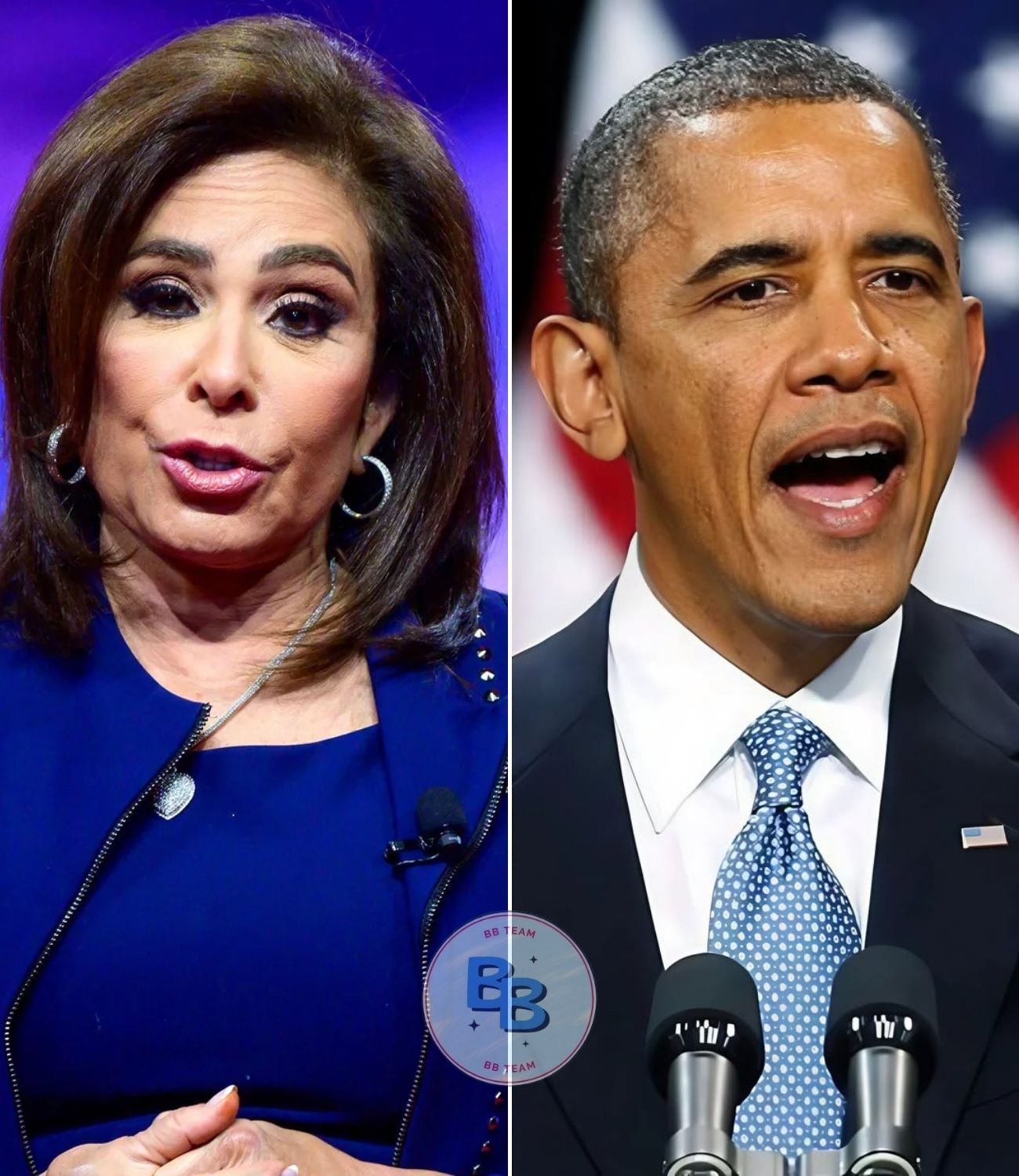
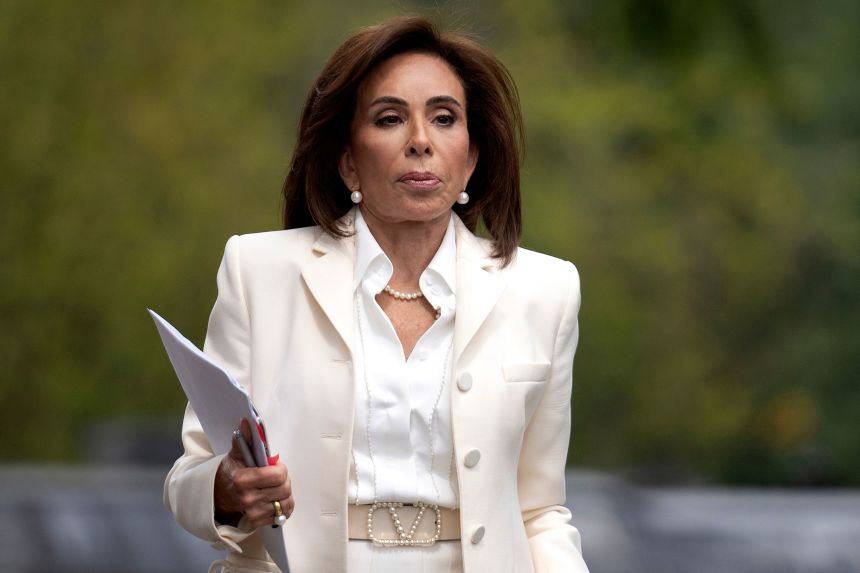
The voice belongs to Jeanine Pirro, a former prosecutor and media figure who stunned audiences by publicly claiming that the 2016 Russian interference storyline was not organic, but strategically engineered at the highest levels.
Pirro did not speak in hypotheticals or coded language, instead presenting her assertion as a direct challenge to the accepted political memory that has shaped elections, investigations, and national distrust for nearly a decade.
According to Pirro, the architect behind that narrative was none other than Barack Obama, a claim so explosive that it immediately sent shockwaves through Washington’s political, media, and intelligence communities.
Within minutes of the statement circulating online, phones lit up across the capital, senior aides scrambled for talking points, and familiar television voices suddenly shifted from confidence to caution.
Pirro went further, demanding a full federal investigation, arguing that the American public deserves transparency about how intelligence narratives are born, sold, and weaponized inside the machinery of power.
Supporters describe her move as long overdue, insisting that questions surrounding 2016 were buried beneath layers of partisanship, selective leaks, and an unspoken agreement never to revisit uncomfortable origins.
Critics, however, rushed to condemn the accusation as reckless, inflammatory, and destabilizing, warning that such claims risk undermining public trust in institutions already strained by years of political warfare.
Yet what truly unsettled Washington was not the accusation itself, but Pirro’s insistence that Obama did not act alone, and that unnamed collaborators remain deeply embedded within elite structures today.
Pirro refused to name those individuals, explaining that the silence was intentional, designed to expose reactions before revelations, and to observe who moved first to control damage behind closed doors.
That silence, paradoxically, spoke louder than any list of names, as insiders reported emergency meetings, canceled appearances, and a sudden retreat from public commentary among usually outspoken figures.
Media watchdogs noted an unusual synchronization in coverage, with multiple outlets dismissing the claim within hours, using nearly identical language and framing, which only intensified online skepticism.
On social platforms, supporters framed the moment as a long-awaited crack in a sealed narrative, arguing that coordinated backlash often signals fear rather than confidence in the underlying truth.

Hashtags surged, livestreams multiplied, and speculation filled comment sections, as millions debated whether this was a baseless provocation or the first domino in a larger political reckoning.
Pirro positioned herself not as a prosecutor, but as a catalyst, insisting that independent investigators, not pundits, should determine whether lines were crossed within intelligence and executive authority.
She emphasized that if the claims are false, a transparent investigation would exonerate everyone involved, restoring trust through sunlight rather than suppression or ridicule.
That framing placed opponents in a difficult position, because rejecting an investigation outright risked appearing defensive, while endorsing one opened doors many preferred permanently sealed.
Former officials privately expressed concern that even unfounded inquiries could expose classified decision-making processes, precedent-setting communications, and politically sensitive interagency relationships.
Meanwhile, legal analysts debated the feasibility of reopening historical intelligence actions, noting that statutes, oversight gaps, and classification barriers complicate any retroactive accountability.
Still, the emotional charge surrounding the accusation proved undeniable, tapping into a public exhaustion with perceived double standards and untouchable political classes.
For many Americans, the issue is not partisan loyalty, but whether power operates under consistent rules, or whether narratives are constructed to protect institutions rather than inform citizens.
Pirro repeatedly framed her accusation as a test of democratic resilience, asking whether a system confident in its integrity would fear scrutiny or welcome it without hesitation.
Observers noted how quickly allies distanced themselves, choosing careful neutrality, a move interpreted by supporters as strategic silence rather than disbelief.
Political strategists warned that regardless of factual outcomes, the controversy could reshape future campaigns by reopening unresolved wounds from the post-2016 era.
International observers also paid attention, recognizing that America’s internal disputes over intelligence credibility influence global perceptions of U.S. moral authority and democratic stability.
As days passed, the absence of definitive rebuttals only fueled speculation, with critics demanding evidence and supporters countering that investigations exist precisely to uncover evidence.
Pirro maintained her stance, repeating that she would cooperate fully with any inquiry, confident that transparency would clarify whether the narrative was defensive necessity or political design.
Washington’s atmosphere shifted palpably, from dismissive confidence to cautious calculation, as officials weighed whether engagement or silence posed the greater long-term risk.
History shows that political earthquakes rarely announce their final shape at inception, instead unfolding through pressure, resistance, and unpredictable secondary shocks.
Whether Pirro’s accusation becomes a footnote or a fulcrum remains uncertain, but the immediate impact on public discourse is undeniable and irreversible.
The controversy has already rewritten the conversation, forcing Americans to confront uncomfortable questions about trust, narrative power, and accountability at the highest levels.
In an era defined by skepticism and viral information, even the perception of hidden architects can destabilize institutions built on assumed credibility.
For supporters, this moment represents courage against consensus, while for critics it signals dangerous speculation with far-reaching consequences.
Either way, the ground has moved, and Washington now stands on uncertain footing, watching carefully to see whether the next tremor brings clarity, collapse, or a reckoning long postponed.
Watch below, because whatever comes next may not simply revisit history, but redefine how power, truth, and accountability are understood in modern American politics.